
15 Warning Signs Your Elderly Parent Can’t Live Alone Safely
By Chloe Walker, RD
Senior Nutrition & Wellness Writer
At Silver Sprout, we have spoken with countless family caregivers who share a similar, heartbreaking story: the moment they realized their aging loved one was in danger. It often starts with a nagging feeling in the pit of your stomach during a visit—a scorch mark on a countertop, a pile of unpaid bills, or a parent who looks thinner and more frail than the last time you saw them.
You want to help, but you aren’t sure if you are overreacting. After all, everyone forgets things sometimes, right?

Recognizing the signs elderly parent can’t live alone safely is one of the most difficult assessments you will make as an adult child. Waiting too long can lead to serious injuries, health crises, or preventable hospitalizations. However, intervening too early can strain your relationship and strip away their independence unnecessarily.
This guide, written from our perspective as senior wellness researchers, will help you identify the clear warning flags that indicate it’s time to have a serious conversation about your parent’s living situation. These aren’t just minor inconveniences—they are critical indicators that require your immediate attention.
Why This Topic Matters for Seniors and Their Families
Before we dive into the specific checklist, it is vital to address the guilt many family members feel. You are not betraying your parent by questioning their ability to live independently; you are being a responsible advocate for their well-being.
The statistics surrounding senior safety at home are sobering. According to the CDC, one in four Americans over the age of 65 falls each year, making falls the leading cause of fatal injury in this age group. Furthermore, seniors living alone with unmanaged cognitive decline are at a significantly higher risk for malnutrition, medication errors, and household accidents.
Recognizing these warning signs allows for early intervention. By acting on the signs elderly parent can’t live alone safely, you can prevent a crisis rather than reacting to one. It is about ensuring your parent maintains the highest quality of life possible—whether that means bringing in extra help, modifying the home, or considering a move to a safer environment.
Understanding the “Can They Live Alone?” Assessment
Assessing whether a senior is safe alone requires looking at the whole person. It is not just about whether they can walk; it is about their cognitive function, nutritional status, and emotional well-being.
As a Registered Dietitian and senior care writer, I look at these signs through a holistic lens. A parent who stops cooking isn’t just “lazy”—they may be physically unable to stand at the stove or cognitively unable to sequence the steps of a recipe. A parent who stops bathing may be afraid of slipping in the shower or suffering from depression.
We have categorized these warning signs into five critical areas: physical safety, household maintenance, personal hygiene, cognitive changes, and social behavior. If you spot multiple checks in these boxes, it is time to take action.
Physical Safety and Mobility Issues
The most immediate threats to a senior living alone are physical. If your parent cannot navigate their environment without risk of injury, their independence is already compromised.
1. Unexplained Bruises, Burns, or Injuries
If you notice mysterious bruises on your parent’s arms, legs, or face, this is a major red flag. Many seniors will hide falls or “minor” accidents because they fear their family will force them to move. They may wear long sleeves in the summer to cover evidence or offer vague explanations like, “I just bumped into the door.”
Actionable Advice:
Do not interrogate them, but do investigate. Check the bathroom and bedroom for signs of struggle, such as towel racks pulled off the wall or furniture that has been moved to cover a hole. If you see burns, check their hands and arms gently. Document these injuries. If they are happening frequently, it is a clear sign that their physical environment has become dangerous for them.
2. Multiple Falls or Near-Falls
Even one serious fall should raise concerns, but a pattern of falling is one of the definitive signs elderly parent can’t live alone safely. Falls create a vicious cycle: after falling once, a senior often develops a fear of walking, which leads to less movement, muscle atrophy, and an even higher risk of falling again.
Actionable Advice:
Watch your parent walk. Do they hold onto walls (furniture surfing) to get from room to room? If they have fallen more than once in the last six months, consult a physical therapist immediately. You may need to implement fall-prevention strategies, such as removing throw rugs or installing tension-mounted grab poles, to mitigate the risk immediately.
3. Difficulty with Stairs or Basic Mobility
Mobility decline often happens gradually. You might notice your parent sleeping on the couch because climbing the stairs to the bedroom is too exhausting or painful. Perhaps they stop going down to the basement to do laundry, wearing dirty clothes instead.
Actionable Advice:
Observe them getting up from a seated position. Does it take multiple attempts? Do they grunt or express pain? If stairs are the issue, consider if the home can be modified for single-level living. If they cannot get up from a chair or toilet without assistance, they are at risk of being stranded on the floor for hours if they fall when no one is around.
Household Maintenance and Safety
The state of your parent’s home is often a mirror of their physical and cognitive state. A formerly tidy house that has fallen into disarray is a loud cry for help.
4. Decline in Home Upkeep
If your parent took pride in a spotless home but now lives among clutter, stacks of newspapers, or dirty laundry, something is wrong. This decline can signal physical frailty (they physically can’t push the vacuum) or cognitive issues (they don’t perceive the mess).
Actionable Advice:
Look for “hidden” messes. Check the refrigerator for spilled food that has hardened. Look at the toilets and sinks—are they being cleaned? Piles of clutter are not just messy; they are trip hazards. If the decline is due to physical limitations, hiring a housekeeper might solve the problem. If they don’t see the mess, it may be a cognitive issue requiring a medical evaluation.
5. Signs of Unsafe Cooking or Appliance Use
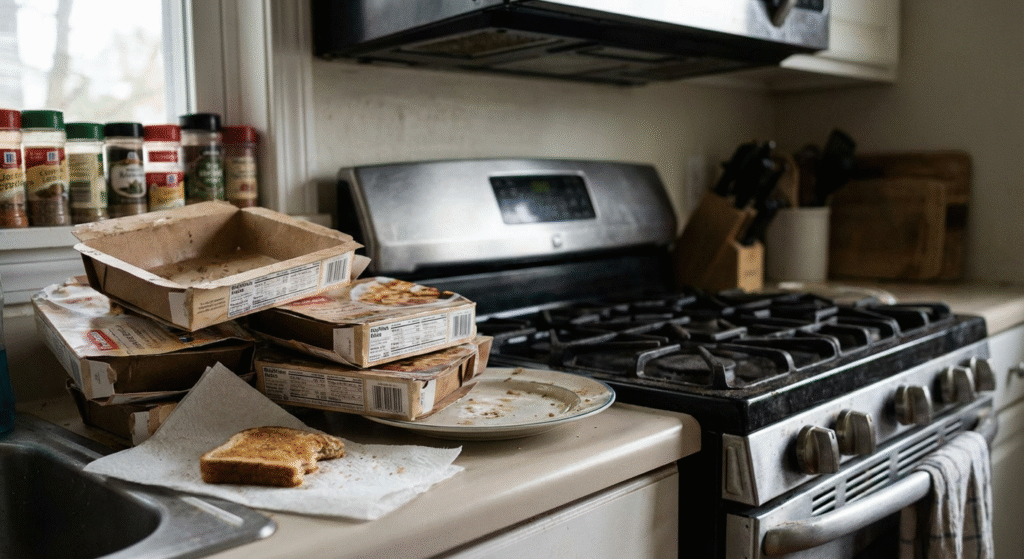
This is one of the most dangerous signs elderly parent can’t live alone safely. Memory lapses in the kitchen can be fatal. Look for scorched pans (indicating they let the water boil dry), blackened potholders, or the smell of gas. If they are leaving the stove on or forgetting they are cooking, the risk of house fire is imminent.
Actionable Advice:
Check the knobs on the stove—are they greasy or turned to the wrong position? If you are worried about them being alone during the day, you need a safety net. We highly recommend looking into advanced medical alert systems with fall detection. These devices can ensure that if a fire starts or they fall in the kitchen, help is summoned automatically, even if they are confused or unable to press a button.
6. Home Safety Hazards Going Unaddressed
Walk through your parent’s home with fresh eyes. Are there lightbulbs burned out that haven’t been changed? Are there loose banisters? A parent who can no longer identify or fix simple hazards is vulnerable.
Actionable Advice:
The bathroom is the most dangerous room in the house. Check the tub and shower area. Is there mold? Is it slippery? If they are struggling to step into the tub, you must intervene before a bone is broken. Consider installing home safety modifications or expert-reviewed shower chairs to provide a stable seat for bathing. This simple addition can restore dignity and safety to their daily routine.
Personal Care and Hygiene
As a wellness writer, I pay close attention to how seniors care for their bodies. A decline in hygiene is rarely about laziness; it is often about ability and mental health.
7. Noticeable Decline in Personal Hygiene
If your parent has body odor, unwashed hair, or is wearing soiled clothing, this is a significant distress signal. Bathing requires complex movements: stepping in, balancing, scrubbing, and drying off. If they fear falling, they will simply stop bathing. It can also be a sign of depression or dementia.
Actionable Advice:
Approach this delicately. Do not shame them. Say, “Mom, I noticed it seems harder to get into the shower lately. Would a grab bar help?” Check their laundry basket—if it’s empty, they aren’t changing clothes. If hygiene is declining due to memory loss (they think they showered yesterday but it was a week ago), they need prompted care or assisted living.
8. Unexplained Weight Loss or Gain
Rapid weight changes are a massive red flag. Weight loss can indicate they are forgetting to eat, cannot drive to the grocery store, or are physically unable to cook. Conversely, weight gain might mean they are relying solely on processed, shelf-stable foods because fresh cooking is too difficult.
Actionable Advice:
Open the fridge and pantry. Is there fresh food? Are there expired items? If cooking has become a chore or a danger, their nutritional health will plummet, accelerating cognitive decline. To ensure they are getting nutritious, balanced meals without the stress of cooking, consider subscribing them to one of the best meal delivery services for seniors. This ensures they receive regular nutrition, which is vital for maintaining strength and mental clarity.
Cognitive and Emotional Changes
Cognitive decline is often the primary reason families begin searching for the signs elderly parent can’t live alone safely.
9. Increased Forgetfulness Beyond Normal Aging
Everyone misplaces keys. However, warning signs include forgetting names of close family members, getting lost in familiar places, or repeating the same question five times in ten minutes.
Actionable Advice:
Look for “compensating” behaviors. Is your parent writing notes for everything? Are they deferring all questions to a spouse? If they are missing appointments regularly or getting confused about the season or year, schedule a cognitive assessment with a neurologist immediately.
10. Confusion About Medications
Medication mismanagement is a leading cause of hospitalization for seniors. If you find pills on the floor, expired bottles mixed with new ones, or if they can’t explain what a specific pill is for, they are not safe managing their own health.
Actionable Advice:
Do a “pill count.” If the prescription was filled 30 days ago and there are 15 pills left (or none left), they are dosing incorrectly. This can lead to overdoses or uncontrolled medical conditions. If this is happening, you need to automate the process. We recommend using automatic pill dispensers or medication management systems that lock away pills and only dispense the correct dose at the correct time, alerting you if a dose is missed.
11. Poor Judgment or Decision-Making
Has your parent fallen for a phone scam? Did they donate a large sum of money to a fake charity? Changes in judgment often precede memory loss. If they are wearing a winter coat in summer or leaving doors unlocked at night, their executive function is compromised.
Actionable Advice:
Monitor their mail and bank accounts if possible. Look for stacks of sweepstakes entries or “thank you” letters from charities you don’t recognize. You may need to obtain Power of Attorney to protect their finances before they are drained by predatory scammers.
Social Isolation and Behavioral Changes
Mental health is just as vital as physical safety. Isolation can be deadly for seniors.
12. Withdrawal from Social Activities
If your parent used to play cards every Wednesday but has stopped going, ask why. They may be embarrassed by incontinence, unable to follow the conversation due to hearing loss or dementia, or afraid to drive.
Actionable Advice:
Encourage them to attend one event and offer to drive them. If they refuse, assess if they are depressed. Isolation accelerates dementia. Finding a senior center that offers transportation or moving to a community with built-in activities can be a lifesaver.
13. Mood Changes, Depression, or Anxiety
Living alone when you know you are losing your abilities is terrifying. This fear often manifests as anger, irritability, or extreme anxiety. If your parent calls you ten times a day or accuses you of stealing from them, these are behavioral symptoms of cognitive distress.
Actionable Advice:
Do not take the anger personally. Recognize it as a symptom. Consult a geriatric psychiatrist. Sometimes, treating underlying depression or anxiety can significantly improve their ability to function.
Financial and Administrative Red Flags
14. Unpaid Bills or Financial Disorganization
Piles of unopened mail, shut-off notices from utility companies, or collection calls are clear signs elderly parent can’t live alone safely without support.
Actionable Advice:
Sit down and offer to help “sort the mail.” If you find bills that are months overdue despite them having the money to pay, their ability to manage complex tasks is failing. Automate their bills online or hire a daily money manager.
15. Driving Incidents
Dents in the car, traffic tickets, or getting lost driving to the grocery store are non-negotiable safety hazards.
Actionable Advice:
Ride with them. Do they stop at red lights? Do they drift lanes? If they are unsafe, you must have the hard conversation about taking the keys. It is better to pay for Uber or a driver than to risk a fatal accident.
How to Take Action: A Step-by-Step Guide
If you have read through this list and recognized several signs elderly parent can’t live alone safely, do not panic. Follow this plan:
- Document Everything: Keep a journal of the signs you see (dates of falls, photos of scorched pans, notes on weight loss). This evidence is crucial for doctors.
- Talk to Their Doctor: HIPAA may prevent a doctor from talking to you, but it does not prevent you from writing a letter to the doctor detailing your concerns before an appointment.
- Have the “Care Conversation”: Approach your parent with love, not judgment. Say, “I love you and I want you to stay independent, but I am worried about your safety in the kitchen. Let’s look at some options.”
- Implement Safety Nets: immediately install the medical alerts, shower chairs, or meal services linked above to buy you time.
- Evaluate Long-Term Options: Decide if home care (bringing helpers in) or residential care (assisted living) is the best financial and practical move.
Frequently Asked Questions (FAQs)
Q: Can a doctor force an elderly person to move out of their home?
A: Generally, no. Unless a senior is deemed legally incompetent by a court, they have the right to make “bad” decisions. However, a doctor can write a prescription for home health care or refuse to discharge a patient to an unsafe home after a hospital stay.
Q: What is the first sign of dementia usually?
A: While it varies, short-term memory loss (forgetting recent events while remembering the distant past) is common. However, poor judgment, confusion about time/place, and difficulty with complex tasks like balancing a checkbook are also early indicators.
Q: How do I talk to my parents about moving when they refuse?
A: Focus on “safety” and “burden.” Many parents don’t want to move for themselves, but they also don’t want to be a burden on their children. Frame the move as a way to give you peace of mind, and involve them in the choice of facility.
Our Final Verdict
Recognizing the signs elderly parent can’t live alone safely is heartbreaking, but it is also an act of love. It marks the transition from being the child to being the protector.
If you identified with the warning signs in this article—specifically the issues with cooking safety, hygiene, or medication errors—please do not wait for a catastrophe to force your hand. Start small: get the medical alert system, set up the meal delivery, or schedule the doctor’s appointment today.
You are not alone in this journey. Millions of families are navigating this exact transition. By being observant and proactive, you are ensuring your parent’s final years are lived with dignity, comfort, and safety.
11 Comments