
Bedroom Safety for Seniors: 15 Modifications to Prevent Falls [2025 Checklist]
My uncle fell getting out of bed at 2 AM. He was disoriented, half-asleep, and the room was pitch dark. He misjudged the edge of the bed and went down hard, breaking his wrist. It could have easily been his hip. That fall was a terrifying wake-up call and it completely changed how we thought about bedroom safety for seniors. It’s not just about grab bars in the bathroom. The bedroom—where seniors spend 8-10 hours a day and are most vulnerable—is just as dangerous.
Research shows that nearly two-thirds of senior falls happen at home. The bedroom is a high-risk zone, with falls often occurring while getting in or out of bed or during urgent, groggy trips to the bathroom in the middle of the night. These nighttime falls are especially dangerous because the senior is often alone and in the dark. The good news is that simple modifications can prevent most of these falls.
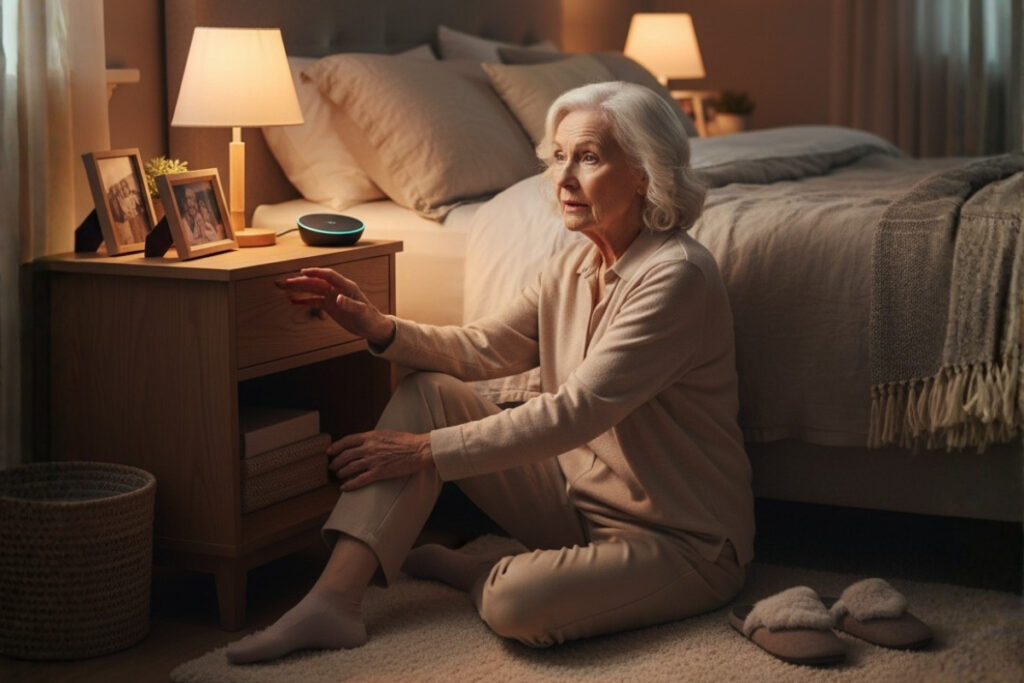
This checklist provides 15 essential bedroom safety modifications to create a safer environment. You’ll learn lighting strategies, bed safety tips, and how to create a clear, hazard-free space to give both you and your parent peace of mind.
Why the Bedroom Is a Fall Risk for Seniors
The bedroom might seem like a safe haven, but it’s filled with hidden dangers for older adults. The most common hazards include:
❌ Getting In and Out of Bed: This is one of the most dangerous moments. The shift in balance, coupled with potential dizziness from standing up too quickly (orthostatic hypotension), can easily lead to a fall.
❌ Nighttime Trips to the Bathroom: Walking in the dark while groggy, disoriented, and rushing to the bathroom is a recipe for disaster.
❌ Poor Lighting: Seniors require two to three times more light to see as clearly as younger adults. Dim lighting can obscure obstacles, furniture edges, and changes in flooring.
❌ Improper Bed Height: A bed that is too high requires a risky step down, while one that is too low strains the knees and back, making it difficult to stand up.
❌ Clutter and Throw Rugs: Cords, furniture, and stacks of books create a treacherous obstacle course, while unsecured throw rugs are a notorious trip and slip hazard.
The 15-Point Bedroom Safety Checklist
Go through your parent’s bedroom with this checklist in hand. Start with the highest-priority items—lighting and bed safety—and work your way through. Even small, inexpensive changes can make a massive difference.
LIGHTING (Highest Priority)
1. Install Motion-Sensor Night Lights
This is the single most effective, low-cost modification you can make. Place motion-sensor night lights along the entire path from the bed to the bathroom. They automatically illuminate the floor when your parent gets up, eliminating the need to fumble for a switch in the dark. Place one on each side of the bed at floor level and another every 6-8 feet along the path.
2. Add a Bedside Lamp with Easy Access
Ensure there is a lamp on the nightstand that is within easy arm’s reach from the bed. Choose a lamp with a large, easy-to-use switch, or even better, a touch-activated lamp that can be turned on with a simple tap. This allows your parent to light up the room before they even swing their legs out of bed.
3. Improve Overall Bedroom Lighting
Replace dim bulbs with brighter, 75- to 100-watt equivalent LED bulbs. Poor overhead lighting creates shadows that can hide trip hazards. Installing dimmer switches is a great solution, allowing for bright light during the day and softer light in the evening.
BED SAFETY
4. Adjust Bed to Proper Height
The ideal bed height allows a senior to sit on the edge with their feet flat on the floor and their knees at a 90-degree angle, roughly level with their hips. For most, this is 20-23 inches from the floor to the top of the mattress.
- If the bed is too high: Remove the box spring and place the mattress on a low-profile platform frame.
- If the bed is too low: Use sturdy bed risers (around 20−20−30) to elevate the frame.
5. Add Bed Rails or Assist Handles
A bed rail provides a stable handhold for support when sitting up, turning, and standing.
- Bed Assist Rails (30−30−60): These are the most common choice. A bar tucks under the mattress and provides a simple, sturdy handle to grab onto.
- Full Bed Rails: These longer rails also prevent a user from rolling out of bed, but use them with caution. The FDA has issued warnings that seniors with dementia can become entrapped. Consult a doctor before using full rails.
6. Position Bed Away from Windows
If possible, arrange the bed so the path to the bathroom doesn’t pass directly by a window. This avoids potential disorientation from headlights or outdoor lights and eliminates dangling blind cords as a tripping hazard.
FLOORING AND PATHWAYS
7. Remove or Secure All Area Rugs
This is non-negotiable. Throw rugs and runners are responsible for thousands of senior falls each year. The safest option is to remove them entirely. If you absolutely must keep one, it must be secured on all four sides with double-sided carpet tape on a non-slip rug pad.
8. Clear the Path from Bed to Bathroom
Create a clear, wide pathway (at least 3 feet) from the bed to the bathroom door. Remove all furniture, clutter, laundry baskets, and anything else that could be tripped over in the dark. This clear zone is essential for nighttime safety.
9. Secure or Remove Electrical Cords
Cords from lamps, clocks, or medical equipment are nearly invisible trip hazards. Run them along the wall and secure them to the baseboard with clips or tape. Never run a cord across a walkway.
FURNITURE & EMERGENCY PREPAREDNESS
10. Arrange Furniture for Support
Place a sturdy, stable piece of furniture, like a heavy dresser, along the path to the bathroom. This provides a solid surface to touch for balance if needed. Remove any wobbly tables or chairs that cannot support a person’s weight.
11. Keep Nightstand Essentials Within Reach
Everything your parent might need during the night should be on the nightstand, within arm’s reach from the bed. This includes:
- A lamp
- Their eyeglasses
- A phone
- Their medical alert button
- A glass of water
12. Install a Medical Alert System
A wearable medical alert system is a lifeline. If your parent falls in their bedroom, they can get help immediately, even if the phone is out of reach. Choose a system with automatic fall detection for the highest level of protection.
13. Keep a Phone Charged and Accessible
In addition to a medical alert system, a phone should always be on the nightstand. If it’s a cell phone, keep it plugged into a charger so it’s always ready. Program emergency contacts on speed dial.
14. Post Emergency Information
Tape a clear, large-print list of emergency contacts, medical conditions, medications, and the home address next to the bed. In the event of an emergency, this gives your parent—or first responders—all the critical information they need at a glance.
15. Consider Relocating the Bedroom
For seniors living in a multi-level home, the single most impactful modification for aging in place is relocating the bedroom to the main floor. This completely eliminates stair use, which is a major fall risk. A den, office, or dining room can often be converted into a safe and accessible ground-floor bedroom.
Quick Start: Do These 3 Things Today
Feeling overwhelmed? Start with these three high-impact, low-cost modifications.
🔦 1. Install motion-sensor night lights along the path from the bed to the bathroom. (Cost: $20)
🛏️ 2. Adjust the bed height so their feet can rest flat on the floor when seated. (Cost: Free to $30)
🚨 3. Place a phone on the nightstand and remove all throw rugs from the floor. (Cost: Free)
These three simple changes can prevent the vast majority of nighttime bedroom falls.
Frequently Asked Questions
Q: What’s the most dangerous time for bedroom falls?
A: Between midnight and 6 AM, during trips to the bathroom. This is due to a combination of darkness, grogginess, rushing, and potential side effects from medication.
Q: Should I get a hospital bed for my parent?
A: For most seniors, it’s not necessary. A regular bed with the proper height and a good bed rail is sufficient. Hospital beds are typically only needed for individuals who are bed-bound or have complex medical needs requiring frequent repositioning.
Q: Are bed rails safe for seniors with dementia?
A: Use them with extreme caution and only after consulting a doctor. Seniors with cognitive impairment can get trapped between the rails and the mattress or try to climb over them, leading to a more dangerous fall. Lowering the bed and placing mats on the floor is often a safer alternative.
Q: What bedroom flooring is safest for seniors?
A: Low-pile carpet is the best choice. It provides good traction and offers some cushioning in case of a fall. Avoid slippery tile and high-pile or shag carpets, which can catch on walkers and feet.
Conclusion
Bedroom falls are terrifying, but they are also highly preventable. Most are not caused by major medical events, but by simple environmental hazards: poor lighting, a stray rug, or a bed that’s too high.
You don’t need a full renovation to create a safe space. You can start today with three simple, inexpensive changes: install motion-sensor night lights, adjust the bed height, and remove all throw rugs. For under $100 and an afternoon of work, you can eliminate the most common causes of nighttime falls.
Walk through your parent’s bedroom tonight. Imagine it’s 2 AM and you’re navigating it in the dark, groggy and in a hurry. What would you trip on? Where would you reach for support? Now, go fix those things. This small effort can provide your parent with the safety they need to remain independent and give you the peace of mind you both deserve.
Continue Your Research:
- Complete Home Safety Modifications for Seniors → – Get our full room-by-room safety checklist.
- Best Medical Alert Systems → – The essential safety net for any senior living alone.
- Aging in Place: The Complete Guide → – Learn how to build a comprehensive plan for staying home safely.
- Best Grab Bars for Seniors → – Ensure the bathroom is as safe as the bedroom.